
Self-Care in the Sand
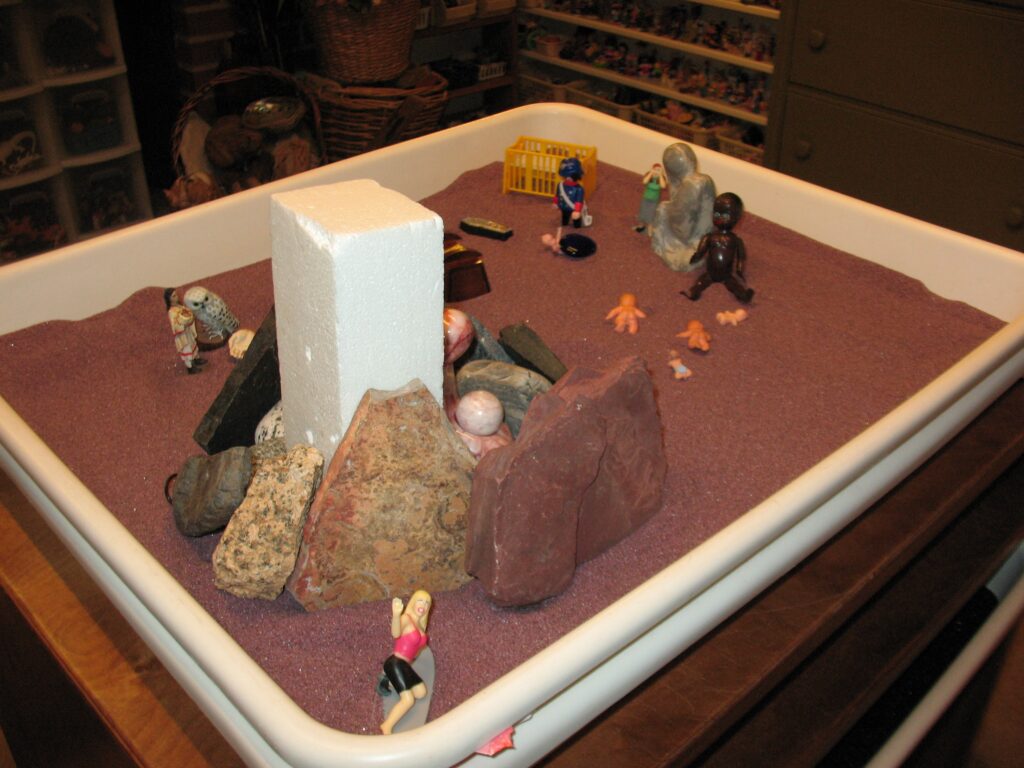
I remain an advocate for therapists to engage in their own therapeutic work. I am proffering this article here to further highlight why we need to dig deep within ourselves to better serve our clients. The bulk of this piece was initially published in the journal of the Association for Play Therapy (June 2019). I’ve […]
Childhood Trauma in Conflicted Custody
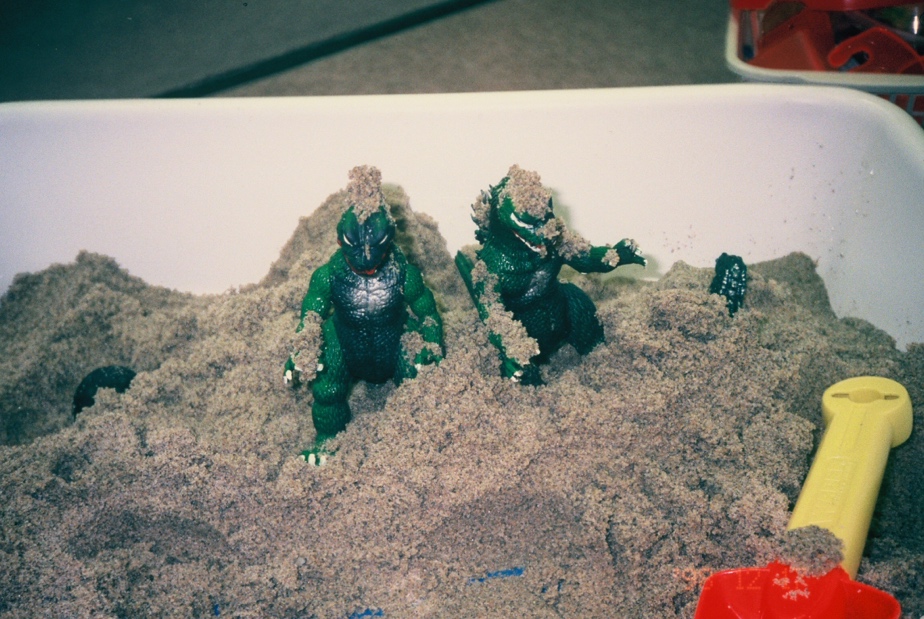
Over the course of my career, I found helping children whose parents were divorcing some of my most stressful cases. Although I had treated childhood trauma for 25 years, I was initially slow to grasp the depths of suffering experienced by those children whose parents were highly conflicted in divorce, or remained so, long afterwards […]
Not About Sex – Sadie’s Story
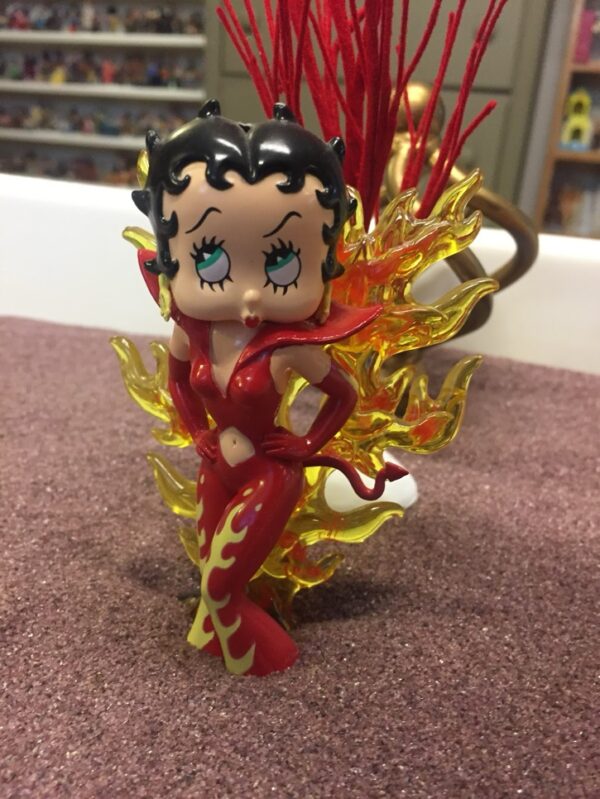
I’ve chosen to share the story of Sadie’s Sandtray process to illustrate the power of jointly experiencing the Creator’s play alive and in the moment. What emerged for her could not have occurred if we were only looking from the outside and/or analyzing her play cognitively. Sadie’s work shows the value of what I call […]
F2M Snapshots of Gender Transition-Part Two
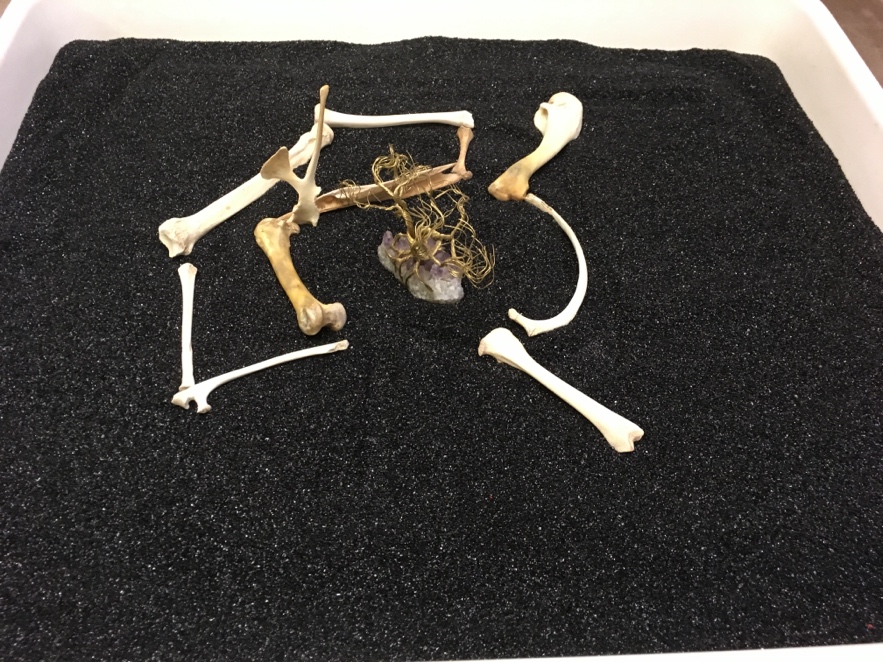
At 14 years of age, Al felt triumphant as he announced his transgender male identity publicly. His social transition had been successful, and he was no longer known as Alice. But, his exuberance did not last long. Al soon became ready to move forward in his gender transition with the use of medical interventions, but […]
F2M Snapshots of Gender Transition-Part One
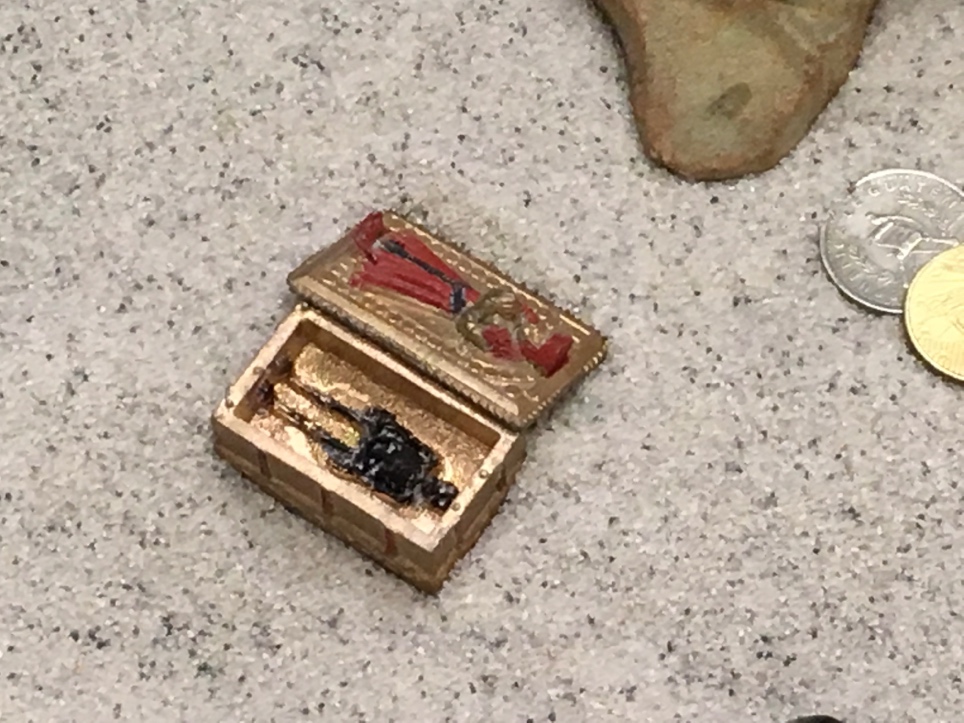
A rare week goes by that transgendered (trans) persons are not addressed in the news. Initially the focus was on the famous. With these revelations, trans and questioning youth could begin to see their secret selves modeled in society. With access to the internet youth can educate themselves about gender identities. Such information may provide […]
Play Details that Heal
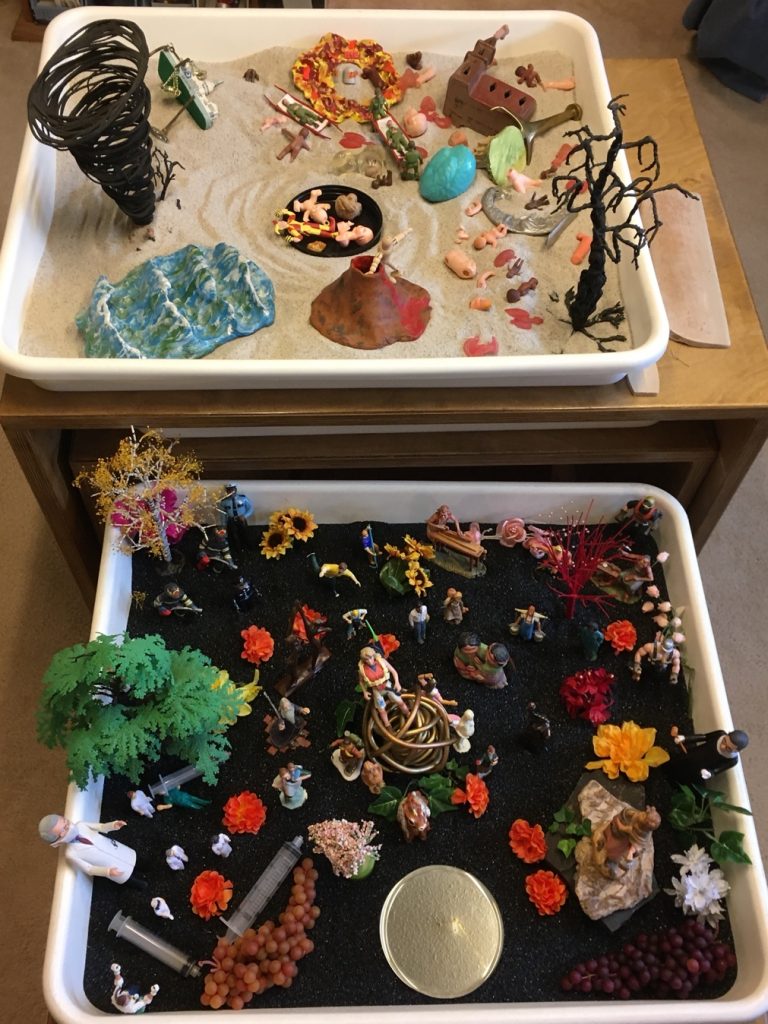
In this blog I share ways a therapist can use the details of the play or Sandtray experience to help people’s growth and healing. I offer my thoughts and several vignettes, including dynamic play with children, to demonstrate why I believe details can be the key to change. The way I work in play therapy […]
A Trauma Narrative Shift
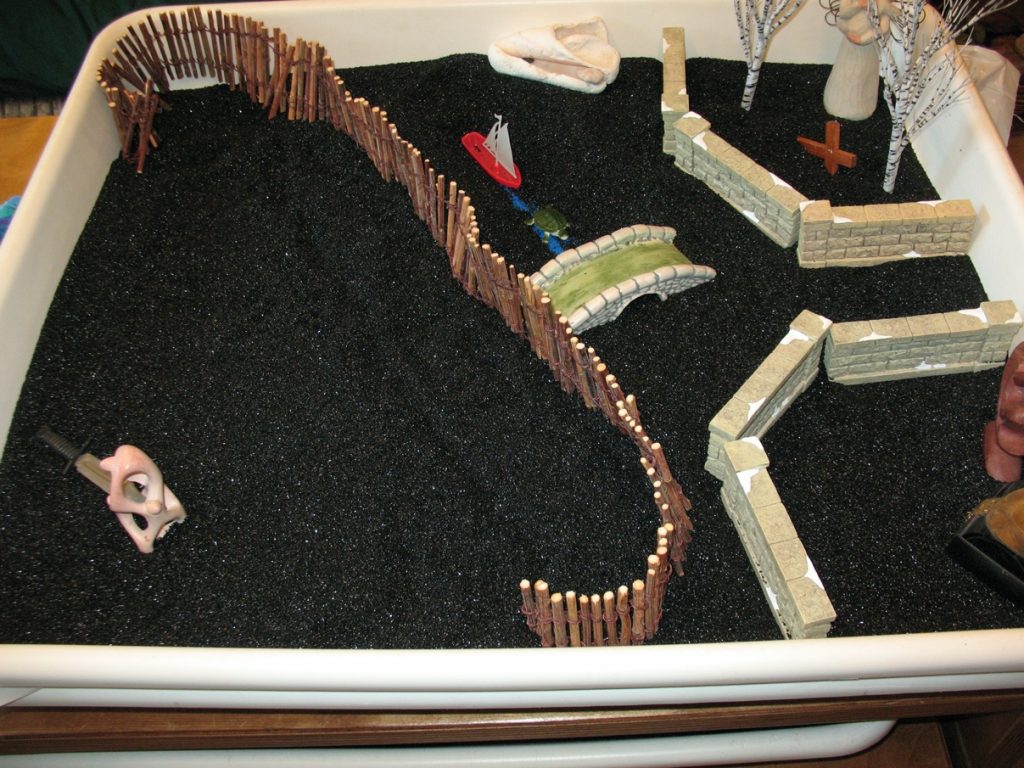
Today I am sharing my experience with a woman in her early 20’s. I am calling her April. I’ve chosen to present this material to demonstrate several points: Most of techniques used here to connect April to her experiences are applicable to drawing, painting. clay, dance, and other artistic modalities. Requesting a Sandtray session “to […]
Sandtray Basics #2: Collecting and Displaying Miniatures
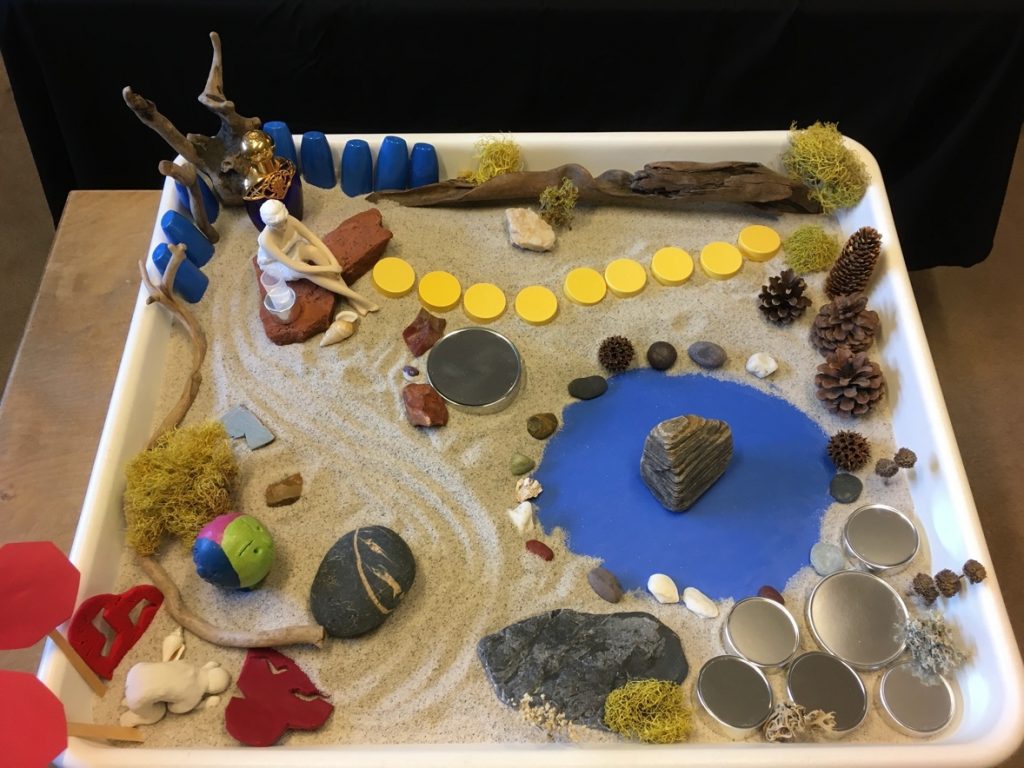
I am continuing this chat to aid the novice and entice those therapists uncertain about venturing into using Sandtray methods.
Sandtray Basics #1: Box, Sand, & Space
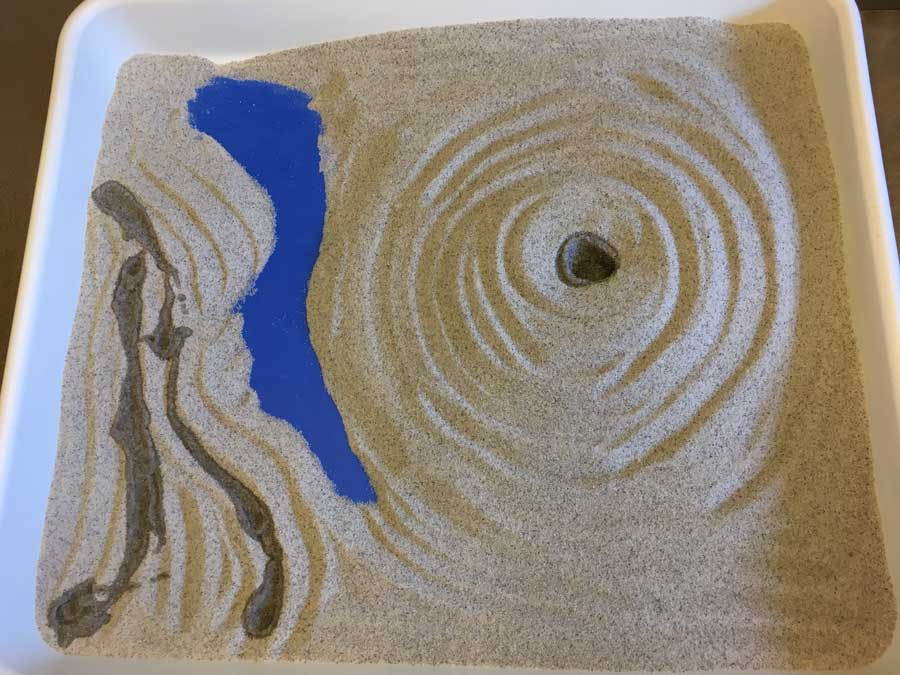
I offer this chat to entice those therapists who may be hesitant to try the Sandtray methods. I hope this blog will help you to engage more easily in Sandtray. I focus here on essential tools that may be acquired at a reasonable price. The next blog will discuss collecting and displaying miniature items. The […]
Children’s Grief
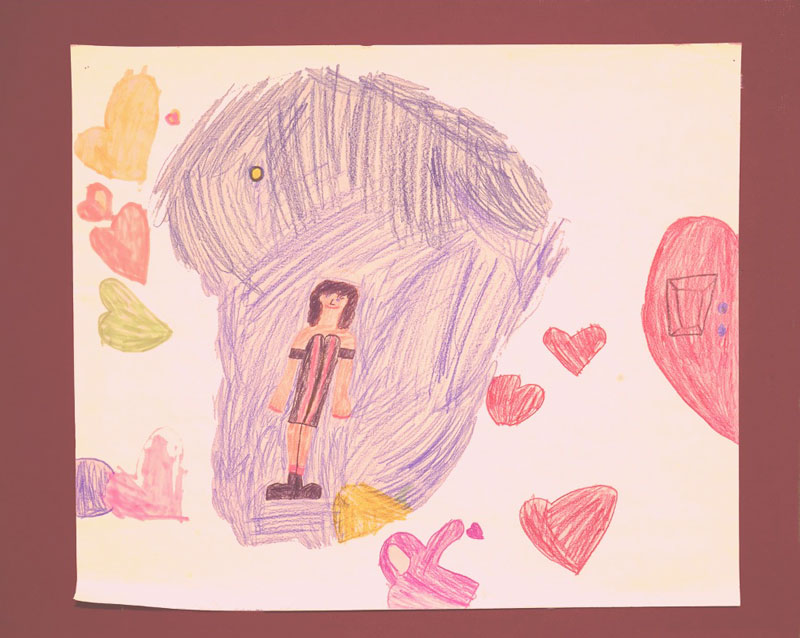
Eight-year-old Lacey shared, “This is a picture of me after my mom died of AIDS. Everything is blue and closed. I know there is love somewhere, but I can’t get to it no matter how hard I try.” Daily I watch the numbers of the dead rise from COVID-19 and anticipate the devastating impact that […]